
A lot can happen in three months.
In July 2026, 11 entrepreneurs in Umlazi, KwaZulu-Natal, met for the first session of a new Ranyaka Building Business (RBB) Club. Clubs are part of Ranyaka’s model for strengthening places from the inside out, bringing people together to learn from one another, build networks and act together. In Umlazi, this work forms part of the Proud of My Town programme, funded by Nedbank.
By September, the Club was becoming a platform for networking, collaboration and access to opportunities for its members and another four local business owners had joined the group. In this edition of Voices from the Ground, where our local coordinators share the work as they see it, one of our local coordinators in Umlazi, Ngcebo Thembela, takes us back to where it began: the morning when a group of local business owners came together to talk about not only what they do, but why they do it.
Ngcebo shares his story
Long before the session was due to begin, the Ranyaka team walked into the Nedbank boardroom at Umlazi Mega City to prepare the space. More than thirty minutes before the official start time, we expected to find an empty room waiting for us to set up. Instead, one of our RBB Club entrepreneurs was already there.
Sitting quietly. Patiently. Eagerly waiting for the day to begin.
It wasn’t just punctuality, it was excitement. It was someone choosing to be present long before the programme had even started. Before we had even finished setting up, our second RBB entrepreneur arrived. We found ourselves asking them if they could wait just a little longer while we completed the room setup.
I smiled to myself. The workshop hadn’t even started, yet two entrepreneurs had already shown us just how much they wanted to be there.
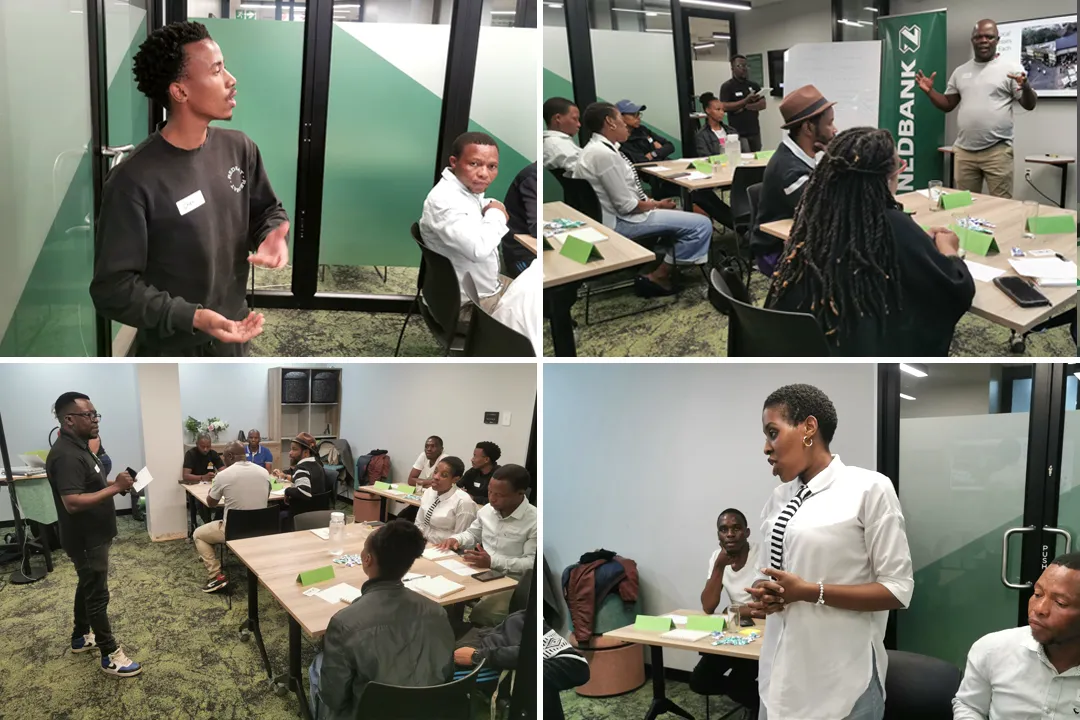
As a team, we spent time moving tables and chairs around, testing different seating layouts until we found one that felt right. It might sound like a small detail, but the environment you create often determines the conversations that follow. We wanted the room to feel less like a formal workshop and more like a space where entrepreneurs could learn from one another.
As the rest of the entrepreneurs arrived, they were welcomed, registered, and given a handout with three questions to reflect on while everyone settled in. The questions were simple, but they encouraged participants to think before speaking and created curiosity around the conversations that were about to unfold.
<<IMAGE CAPTION>>
The moment the room came alive
Once everyone had arrived, I welcomed the group and introduced the Ranyaka team before handing over to Sonya, a member of our Marketing team, to facilitate the opening icebreaker. I’ve attended countless workshops over the years, and one thing I’ve learnt is that the first few minutes can determine whether a room remains quiet for the rest of the day or comes alive.
On this particular occasion, it came alive.
Instead of asking entrepreneurs to introduce themselves in the usual way, Sonya challenged each entrepreneur to identify their own business through a series of playful clues.
“This business freshens up your garden.”
The entrepreneur who does landscaping immediately recognised his business.
“This business sells something you can eat… but it also flaps its wings.”
The poultry farmer burst into laughter as he realised Sonya was describing his business.
Within minutes, barriers had disappeared. Entrepreneurs were smiling, laughing, with one another. The icebreaker did far more than help people remember businesses, it reminded everyone that somehow, somewhat we are all connected by an “invisible” string, if one person pulls, we can all feel the tension! (A ball of wool tossed around the room was involved in the activity, served as a visible, tangible reminder of this truth.)
The second part of the activity invited entrepreneurs to answer three questions using only one word for each response. What struck me wasn’t necessarily the answers themselves, but what they revealed. As organisations working with communities, it’s easy to assume we already know what entrepreneurs need. Yet listening carefully often tells a very different story.

<<IMAGE CAPTION>>
Eleven businesses, one ecosystem
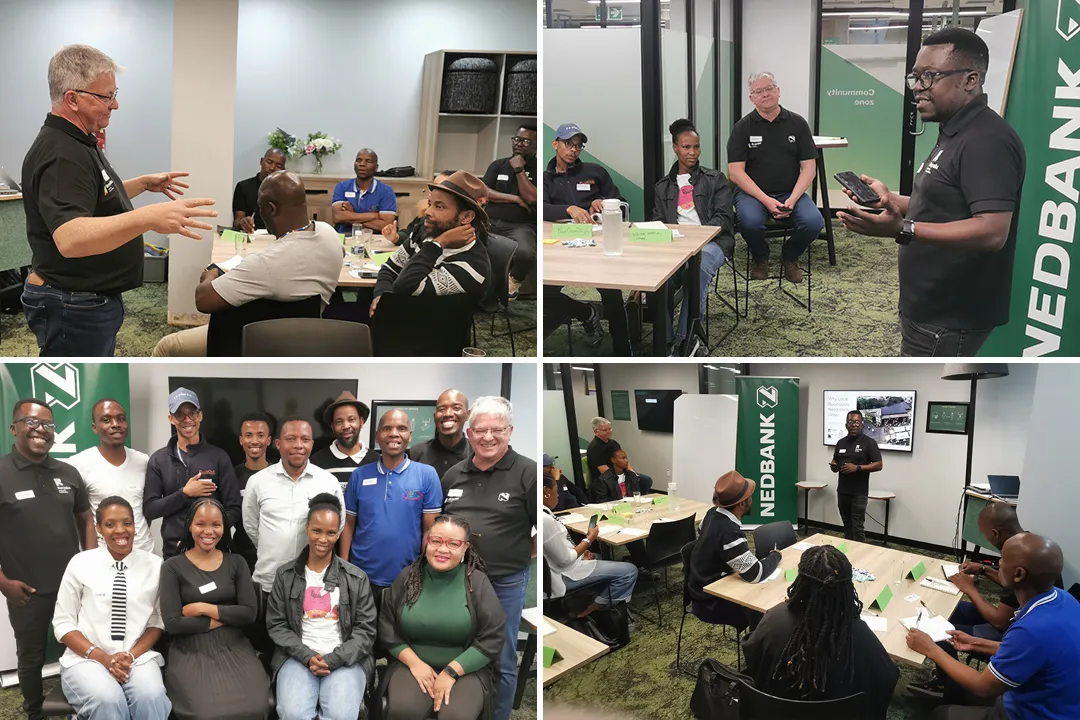
Another moment that stood out was when entrepreneurs were asked what skills they could offer other businesses within the RBB Club. Looking around the room, it became clear that we weren’t sitting with eleven individual businesses. We were sitting with an ecosystem.
Healthcare. Education. Manufacturing. Property. Agriculture. Landscaping. Beauty. Creative industries. Eleven entrepreneurs. Eleven different sectors.
Suddenly, the room wasn’t just full of business owners, it was full of opportunities. Opportunities to collaborate, to support one another, to buy locally, and to build something far greater than any one business could achieve alone.
Finding the why
The discussion naturally led into one of the most powerful parts of the day, the opportunity for every entrepreneur to share the “WHY” behind their business. There was only one rule. “Making money” was not an acceptable answer. What followed was honest, emotional and deeply inspiring.
Entrepreneurs spoke about wanting independence. Others described seeing problems in their communities and deciding to become part of the solution. Some were driven by a desire to support emerging artists, while others wanted to help small businesses build stronger brands, corporate identities or create employment opportunities for people around them.
Every story was different. Every story had purpose.
<<IMAGE CAPTION>>
Sbahle’s story
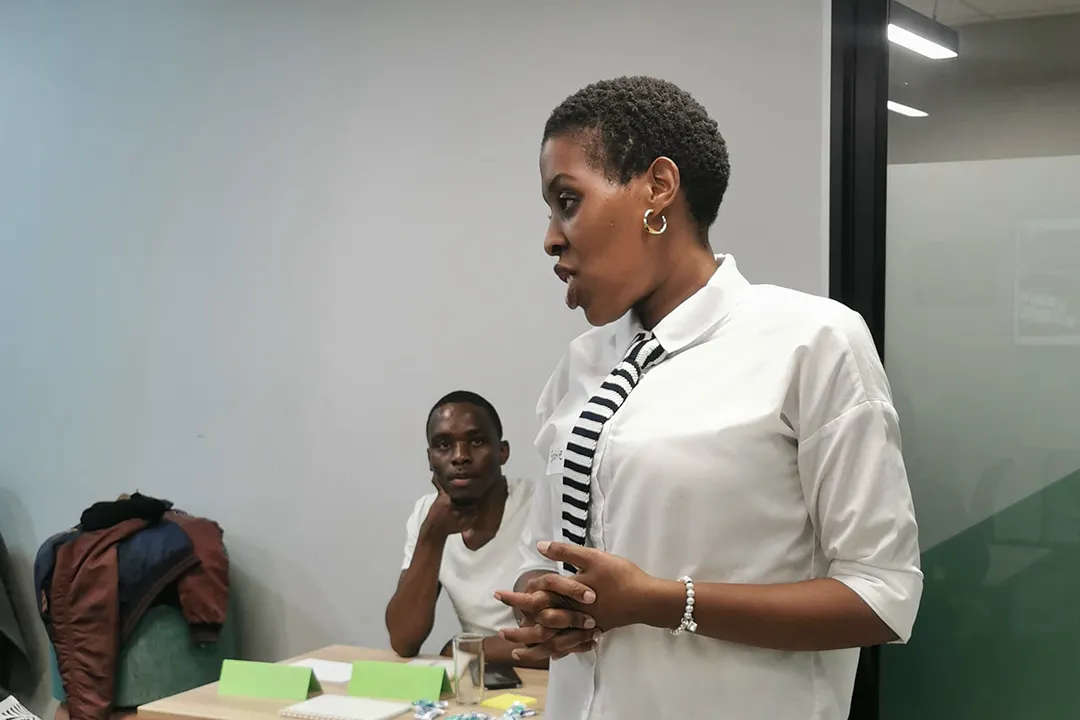
Then Sbahle Vezi shared a journey that brought the room to complete attention. Sadly, Sbahle passed away shortly after the launch of the Club. With the blessing of her family, we share this part of her story here as it unfolded on that day. In a future blog post, we will share how the business she established is continuing through her younger sister, Ncane, who has since joined the programme.
Sbahle explained that she manufactured her own perfumes.
Growing up with eczema, Sbahle had found that many fragrances irritated her skin, leaving her uncomfortable and affecting her confidence. Instead of accepting that limitation, she entered the fragrance industry, learnt everything she could, and eventually established her own perfume business to create products better suited to people with similar skin sensitivities.
It wasn’t just a business idea. It was a solution born from lived experience. Listening to her, I realised that some of the most meaningful businesses don’t begin with market research. They begin with personal challenges that someone refuses to let define them. At the end of the session, she invited everyone to sample her fragrances. It was a simple gesture, but after hearing her story, the perfumes represented much more than a product. They represented resilience, courage and purpose. And today, as Ncane continues the business Sbahle began, those fragrances carry another meaning too: a connection to Sbahle, her vision and the legacy she left behind.
<<IMAGE CAPTION>>
Support shaped by what entrepreneurs need
The session continued with the completion of the RBB Club Needs Assessment. Rather than treating it as another questionnaire, we worked through it together, ensuring every entrepreneur understood each question and had the opportunity to provide thoughtful responses. For me, this may have been the most important activity of the day. The information gathered will now shape the next phase of our Enterprise Support Programme. Instead of designing workshops based on assumptions, we now have the opportunity to respond directly to what entrepreneurs have told us they need.
Could collaboration be a competitive advantage?
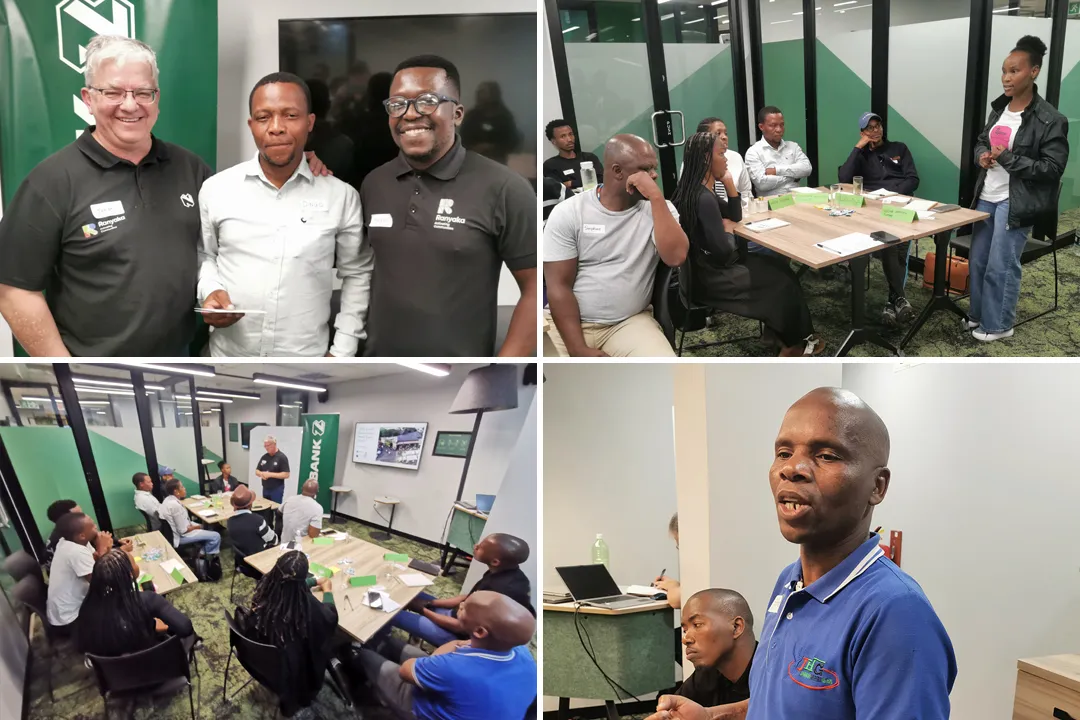
Johan Olivier, Ranyaka co-founder and Executive Director, then introduced the group to Ranyaka’s digital support platforms, and the entrepreneurs were also encouraged to join Nedbank’s SimplyBiz platform. He also challenged the room to think differently about business.
What would happen if entrepreneurs bought from one another before looking elsewhere? How much stronger could local businesses become if they shared resources, knowledge and opportunities, through the establishment of hubs? Could collaboration become a competitive advantage?
These weren’t questions that required immediate answers. They were ideas planted in fertile ground. Ideas that I believe will continue growing long after the session ended.
<<IMAGE CAPTION>>
Not building alone
As the formal programme came to a close, entrepreneurs collected their lunch packs before heading back to their businesses. Although we couldn’t all sit down together to enjoy lunch inside the bank, the conversations didn’t stop. Entrepreneurs exchanged contact details, discussed possible collaborations, and continued the conversations that had started earlier in the day.
That, perhaps more than anything else, was the real success of the event. Not the presentation, the slides or even the agenda. The success was seeing entrepreneurs recognise that they are not building alone. Community development isn’t only about delivering programmes. It’s about creating spaces where people discover opportunities in one another, where ideas are shared freely, and where a simple conversation can become the beginning of a partnership.
Driving home afterwards, I kept thinking about something. People often measure the success of a workshop by how many people attended. I do not. I measure it by whether people were truly present. That day, they were.
They listened. They laughed. They inspired one another. Most importantly, they reminded us that building businesses is really about building people. That day wasn’t simply another RBB Club meeting.
It was a reminder that strong businesses are built by people, strong communities are built through relationships, and the best support begins with one simple question:
“Why?”

<<IMAGE CAPTION>>
Where the Club is now
Three months on, the Umlazi RBB Club has consolidated its structure and membership, and practical business-development support is being rolled out to its members, building on what entrepreneurs shared in the needs assessment.
Work is also under way to identify potential mini-hub spaces in Umlazi and to profile local entrepreneurs and their businesses, taking Johan’s question about establishing hubs a step closer to reality.
The Club is also increasingly opening doors for its members to network, collaborate and access new opportunities, such as the RBB Umlazi Market Day held at Zakude Outlet on 26 September.
Are you an entrepreneur in Umlazi? Contact Ngcebo Thembela at ngcebo@ranyaka.co.za to find out about joining an RBB Club.
Want to strengthen local enterprise in a place you care about? We work with funders, businesses and municipalities to build connected local economies. Get in touch with us here.
This blog post is published in memory of Sbahle Vezi. We are grateful to her family for allowing us to share her story. Her legacy continues through the business she founded, which is now being carried forward by her sister, Ncane.